
People talk about strength work and mindful movement as if they belong to different types of people. One sounds intense. The other sounds calm. One is about pushing. The other is about slowing down.
That split does not hold up very well once you actually do both. A lot of people find that strength work helps their slower practice feel steadier. And slower movement helps strength work feel less rushed and less rough on the body. They do not cancel each other out. Most of the time, they make each other better.
Strength Helps In Quiet Ways First
For a lot of people, the first change is not dramatic. It is small.
A pose feels less shaky. A hold lasts longer without that panicky feeling kicking in. The body does not wobble so much when moving from one shape to another. There is a bit more support there.
That is where strength work starts to help a mindful practice. Not because everything suddenly becomes easier, but because the body has more underneath it. There is less collapsing. Less scrambling. Less reliance on tension to stay in place.
For a lot of people, strength is not really about making the practice look tougher. It is about feeling steadier. It is about not wobbling through the same holds or feeling unstable every time the body has to support itself for a little longer.
Slower Movement Can Make Strength Work Feel Better Too
A lot of strength work goes wrong in very ordinary ways. People rush. They grip too hard. They stop breathing properly. Their shoulders start doing work they should not be doing. The whole session gets louder in the body than it needs to be.
That is why more coaches are starting to blend yoga and strength work instead of treating them like two separate things. Yoga, breath-led movement, and slower forms of practice usually help people pay more attention to what their body is doing as they move.
That changes a lot. The breath stays with the movement. The body stops fighting itself so much. Strength work can still be hard, but it stops feeling messy.
That matters more than people sometimes think. Plenty of people are not struggling because the workout is too easy. They are struggling because everything feels tense and disconnected while they are doing it.
Not Everyone Wants Their Training To Feel Harsh
This is a big reason these two styles work well together. A lot of people want to feel stronger, but they do not want every session to feel harsh.
There is still room for harder training, of course. Some people love that. But not everyone wants every session to feel like a test they barely survived. A lot of people want work that still feels deliberate and strong without dragging them into that all-or-nothing mood.
That is why more controlled forms of resistance work make sense here. They give people another option. Something with structure. Something strong. But not always aggressive.
In the Pilates and Lagree world, that difference is pretty easy to feel. Reformer-based work usually feels more measured. Lagree-style sessions often feel tougher and more demanding. Some people want exactly that. Others want strength that sits better next to yoga, breathwork, recovery, or a calmer home routine.
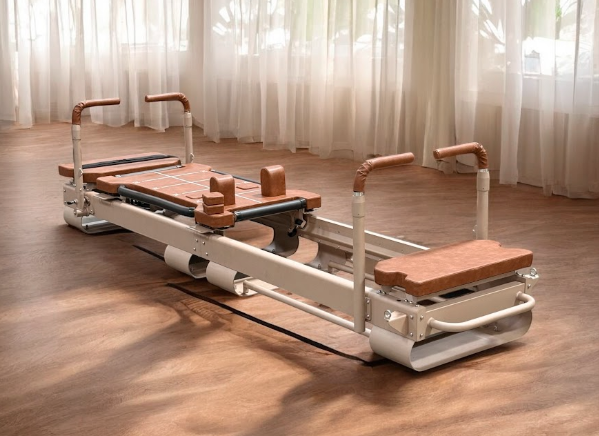
That is often where interest in a lower-impact megaformer alternative for home use starts. Not because someone wants less from the work, but because they want the work to fit the rest of their life around it.
A Lot Of Recovery Problems Start During The Session
People often talk about recovery as if it begins after the workout. But a lot of it starts while the work is happening.
If someone is clenching through every movement, holding their breath, and forcing everything with tension, the body usually carries that out of the session too. Then recovery becomes about trying to unwind from work that felt more stressful than useful.
Mindful movement helps because it changes the feel of effort. It makes people notice when they are overdoing what does not need to be overdone. The neck does not need to grip that hard. The jaw does not need to tighten. The hips do not need to brace through every rep.
That kind of awareness can make a big difference. The body still works. It still gets challenged. But it does not always come out the other side feeling like it got dragged through something.
Home Practice Feels Better When It Does Not Pull In Opposite Directions
Most people are building their routine around what actually works that day. The room might be small, time might be short, and energy might not be great. If one part of the practice feels grounding but the other feels intense in the wrong way, it throws everything off.
Calm yoga and brutal strength work do not always sit well next to each other. If strength feels useful but the slower work never helps the body settle, that feels off, too.
A bit of strength can help someone feel more supported in slower movement. A bit of slower movement can help strength work feel cleaner and easier to recover from. The point is not to build the perfect split. It is to stop making the different parts of the routine fight each other.
It Does Not Have To Say One Thing About You
A lot of people quietly get stuck on identity here. They think they have to be the yoga person or the strength person. The calm one or the intense one. The recovery person or the results person.
A person can care about breath, grounding, and nervous system support while still wanting more strength in the legs, back, and core. They can love slower practice and still want a challenge. They can want more support in the body without wanting every session to feel soft.
That is probably why this mix keeps making sense. It gives people more room. The body gets stronger. The movement gets cleaner. The routine feels more complete without becoming more extreme.
 Ask Violeta Thomasitter how they got into fitness and training tips and you'll probably get a longer answer than you expected. The short version: Violeta started doing it, got genuinely hooked, and at some point realized they had accumulated enough hard-won knowledge that it would be a waste not to share it. So they started writing.
What makes Violeta worth reading is that they skips the obvious stuff. Nobody needs another surface-level take on Fitness and Training Tips, Game Highlights and Analysis, Player and Team Profiles. What readers actually want is the nuance — the part that only becomes clear after you've made a few mistakes and figured out why. That's the territory Violeta operates in. The writing is direct, occasionally blunt, and always built around what's actually true rather than what sounds good in an article. They has little patience for filler, which means they's pieces tend to be denser with real information than the average post on the same subject.
Violeta doesn't write to impress anyone. They writes because they has things to say that they genuinely thinks people should hear. That motivation — basic as it sounds — produces something noticeably different from content written for clicks or word count. Readers pick up on it. The comments on Violeta's work tend to reflect that.
Ask Violeta Thomasitter how they got into fitness and training tips and you'll probably get a longer answer than you expected. The short version: Violeta started doing it, got genuinely hooked, and at some point realized they had accumulated enough hard-won knowledge that it would be a waste not to share it. So they started writing.
What makes Violeta worth reading is that they skips the obvious stuff. Nobody needs another surface-level take on Fitness and Training Tips, Game Highlights and Analysis, Player and Team Profiles. What readers actually want is the nuance — the part that only becomes clear after you've made a few mistakes and figured out why. That's the territory Violeta operates in. The writing is direct, occasionally blunt, and always built around what's actually true rather than what sounds good in an article. They has little patience for filler, which means they's pieces tend to be denser with real information than the average post on the same subject.
Violeta doesn't write to impress anyone. They writes because they has things to say that they genuinely thinks people should hear. That motivation — basic as it sounds — produces something noticeably different from content written for clicks or word count. Readers pick up on it. The comments on Violeta's work tend to reflect that.